
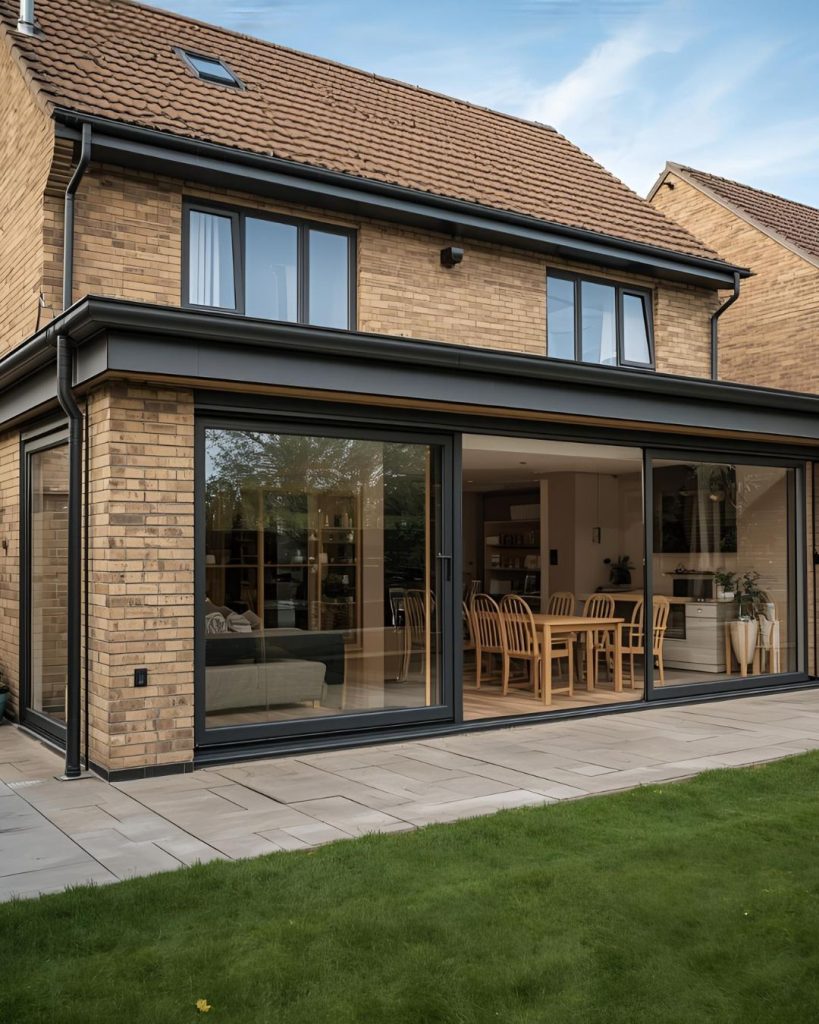
Do I Need Planning Permission for an Extension in Milton Keynes? | Local Builder’s Guide
Planning permission is the question that sits at the front of every extension project — and the answer determines whether you can start building as soon as you’re ready or whether you need to wait two to three months for a decision from Milton Keynes City Council before work can begin. The good news is that most single storey rear extensions across Milton Keynes fall within permitted development rights, meaning no planning application is needed. But the rules have conditions, and exceeding any one of them means you need formal approval.
This guide explains the permitted development rules for single storey extensions, what you can build without applying, when you do need planning permission, and what the application process involves if your project requires it.
What Is Permitted Development?
Permitted development is a set of rights granted by the government that allow homeowners to carry out certain building work without needing to apply for planning permission. These rights cover a wide range of improvements including rear extensions, loft conversions, outbuildings, and porches — subject to specific conditions on size, height, and positioning.
The principle behind permitted development is that certain types of building work have a limited impact on neighbouring properties and the wider area, so they don’t need individual assessment by the planning authority. As long as your project meets every condition, you can proceed without an application.
The key word is every. If your project exceeds any single condition — even by a small amount — the permitted development rights don’t apply and you need a full planning application.
Permitted Development Rules for Single Storey Rear Extensions
For a single storey rear extension on a house in Milton Keynes, permitted development allows the following without planning permission.
Depth from the original rear wall. You can extend three metres from the original rear wall for an attached house — a semi-detached or terraced property. For a detached house, the allowance increases to four metres. These measurements are taken from the rear wall of the original house as it was first built or as it stood on 1 July 1948, whichever is later. Previous extensions count against this allowance — if someone added a two metre extension before you bought the property, you only have one metre of permitted development remaining on an attached house.
Maximum height. The extension must not exceed four metres in overall height. The eaves height must not exceed three metres. If the extension is within two metres of a boundary, the maximum eaves height drops to three metres.
Width. The extension must not extend beyond the side elevation of the original house. It cannot wrap around the side without additional consideration under different permitted development rules.
Coverage. The extension, together with any other buildings, enclosures, and containers, must not cover more than half the area of land around the original house. This calculation includes sheds, garages, and any other outbuildings.
Materials. Materials used in the external walls and roof must be similar in appearance to the existing house. This doesn’t mean identical — but a red brick house extended in grey render would likely be challenged.
Position. No part of the extension can be forward of the principal elevation or the side elevation facing a highway.
If your project meets all of these conditions, you can build without a planning application. Your builder should confirm the permitted development position for your specific property at the outset.
The Prior Approval Route for Larger Extensions
If you want to build deeper than the standard three or four metre allowance, there’s a middle ground between permitted development and a full planning application. The prior approval process — sometimes called the larger home extension scheme — allows single storey rear extensions up to six metres on attached houses or eight metres on detached houses.
Prior approval requires you to notify Milton Keynes City Council before building. The council then notifies your immediate neighbours, who have 21 days to comment. If no objections are received, or if the council considers any objections don’t raise valid planning concerns, approval is given and you can proceed. If objections raise legitimate concerns about impact on amenity, the council may refuse.
Prior approval costs less than a full planning application — typically £96 compared to several hundred pounds — and the decision period is shorter at 42 days. It’s a useful route for extensions that exceed the standard depth limits but don’t warrant the full planning process.
When Do You Need Full Planning Permission?
A full planning application is required when your project doesn’t meet the permitted development conditions. Common scenarios across Milton Keynes that trigger the need for planning permission include double storey extensions of any size, single storey extensions that exceed the depth limits even under the prior approval route, side extensions that are visible from a highway, extensions that would cover more than half the land around the original house, and work on listed buildings.
Properties that have had permitted development rights removed also need planning permission for work that would otherwise be permitted. Some newer housing developments in Milton Keynes have conditions attached to the original planning consent that restrict or remove permitted development rights — meaning even a modest rear extension needs a formal application. This is common on estates where the developer or the council wanted to maintain a specific character. Check your property’s planning history or title deeds if you’re unsure.
Flats and maisonettes do not benefit from permitted development rights for extensions. Any extension work on a flat requires a full planning application.
The Planning Application Process
If your project needs planning permission, the process follows a standard path. Architectural drawings are prepared showing the proposed extension in relation to the existing property and neighbouring buildings. The application is submitted to Milton Keynes City Council along with the application fee. The council validates the application, notifies neighbours, and publishes it for public comment. A planning officer assesses the proposal against local and national planning policies, considering factors including impact on neighbours, design quality, and compatibility with the existing property and streetscape.
The statutory determination period is eight weeks for a householder application. In practice, some decisions take longer if the planning officer requests amendments or additional information. The majority of single storey extension applications across Milton Keynes are approved, particularly where the design is proportionate to the existing property and doesn’t cause significant harm to neighbouring amenity.
If the application is refused, you can appeal to the Planning Inspectorate or amend the design to address the reasons for refusal and resubmit.
What About Building Regulations?
Planning permission and Building Regulations are separate processes. Even if your extension falls within permitted development and doesn’t need planning permission, it still needs to comply with Building Regulations. These cover structural integrity, thermal insulation, ventilation, drainage, electrical safety, and fire safety.
Building Regulations approval is obtained either through a full plans application — where drawings are submitted and approved before work starts — or a building notice, where you notify the council before starting and inspections happen during construction. Your builder should arrange whichever route is appropriate and coordinate all inspections during the build.
Practical Steps Before You Start
Confirm whether your property has permitted development rights. Check for any conditions on the original planning consent that restrict these rights. If you’re in any doubt, your builder should check or you can request a Certificate of Lawful Development from Milton Keynes City Council — a formal confirmation that your proposed work falls within permitted development.
Measure the depth of any existing extensions. If a previous extension has used some of your permitted development allowance, you need to account for that in your plans.
If you’re considering an extension at your Milton Keynes home and aren’t sure whether planning permission is needed, get in touch. We assess the planning position for every project before any design work progresses, giving you clarity from the outset.